
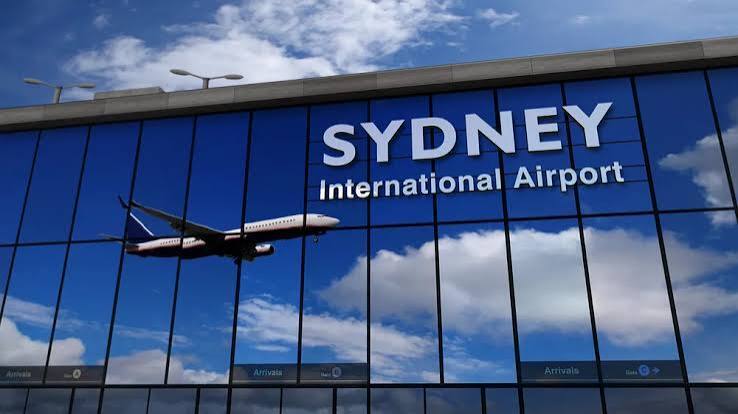
– More than 150 domestic and international flights delayed from 7 a.m. (local time), including 95 on the Qantas network alone,
– Qantas flight to Christchurch: departure delayed by more than 1 hour,
– Flight to Vietnam: delayed by more than 70 minutes,
– Flights to Perth: approximately 1 hour delayed.
Sydney International Airport is experiencing another operational crisis. For the second day in a row, tens of thousands of travelers had their plans disrupted by a wave of massive delays, caused not by a technical failure or adverse weather conditions, but by a much more structural problem: a critical shortage of available air traffic controllers.
As early as 7:00 a.m. (local time) on Saturday, air traffic control teams had to implement staggered departure times to ensure the safety of air traffic, due to insufficient staffing in the control tower. As a direct result, more than 150 domestic and international flights departing from Sydney were delayed throughout the morning. The previous day, more than 100 flights had already been disrupted, with delays and cancellations suggesting that this was not an isolated incident.
Some passengers waited up to two hours before being able to take off. A Qantas flight to Christchurch, initially scheduled for the morning, didn’t begin taxiing until more than an hour late, while a flight to Vietnam departed the tarmac more than 70 minutes behind schedule. Flights to Perth were also affected, experiencing an average delay of an hour.
Airservices Australia under pressure
Airservices Australia, the public body responsible for managing Australian airspace and air traffic control at the country’s major airports, acknowledges difficulties in staffing full control tower teams. In a statement, the agency emphasized that its air traffic controllers perform a demanding and safety-critical job, while admitting to implementing traffic management measures to cope with current operational constraints.
The head of the Airlines for Australia and New Zealand trade association, Stephen Beckett, warned of the scale of the repercussions: according to him, “every disruption in Sydney ripples across the entire national, and even international, air network, given how central this airport is to Australia.” Faced with mounting pressure, the federal Minister for Transport reportedly asked Airservices Australia to present a concrete plan to rectify the situation.
Qantas and Virgin Australia among the most affected
Unsurprisingly, the two main airlines operating from Sydney are among the hardest hit. Qantas has seen a large part of its flight schedule disrupted, with occasional cancellations on its domestic network. Its low-cost subsidiary has also reported a significant number of delayed departures.
What rights do affected passengers have?
Unlike the European Union, where Regulation (EC) No 261/2004 imposes strict rules and fixed compensation in the event of significant delays, Australia does not have an equivalent legal framework specifically dedicated to air transport.
In practice, in the event of a delay or cancellation, airlines generally offer assistance: re-routing on an alternative flight, a refund of the ticket or ad hoc assistance, depending on the circumstances and the fare conditions of the ticket purchased.