
Every year, thousands of pet owners type the same query into their search engine: “Does Qantas allow dogs in the cabin?” or “How do I travel with my cat to Australia?” The answer often surprises them, as Qantas’s policy operates very differently from that of most American or European airlines. Here’s a complete overview of Qantas’s policy regarding the transport of animals on board:
Key points to remember about Qantas’s pet policy
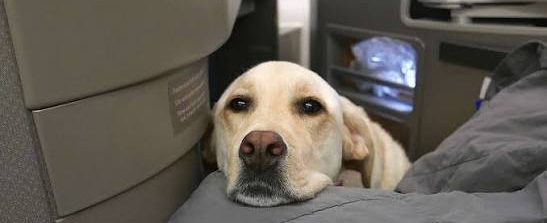
Unlike many airlines that allow small animals under the front seat in the cabin, Qantas does not allow any pets in the cabin, with one exception: duly certified assistance or support dogs, which travel free of charge at their owner’s feet. All other animals, whether dogs, cats, rabbits, guinea pigs, birds, reptiles under 5 kg, or even certain fish, must travel in the hold via the dedicated cargo service, Qantas Freight.
Another important point: Qantas does not offer checked baggage for animals, an option sometimes offered by other carriers. Therefore, there are only two possibilities: assistance dogs in the cabin, or animals transported as cargo in the hold, under controlled temperature and pressure.
Booking your pet’s journey: the procedure
The golden rule repeated by all Qantas agents and animal relocation specialists: book your pet’s transport before finalizing your own ticket. The number of spaces for animals is limited on each aircraft, and not all planes are equipped to transport live cargo. A flight full of passengers may therefore be fully booked for animals, even if the flight itself still has available seats.
For domestic travel within Australia:
If the combined weight of the animal and its carrier does not exceed 50 kg, booking can usually be made directly online. Above this threshold, you must contact Qantas Freight directly. For all international travel, the use of an approved pet travel specialist is almost always required.
For international flights to or from Australia
Qantas now almost always requires the use of an animal relocation specialist. This is not an unnecessary requirement: these professionals are familiar with the specific quarantine requirements, import permits, health certificates, and processing times of each country, which vary considerably from one destination to another. An incomplete application can result in denied boarding or unexpected quarantine upon arrival.
How much does it cost to transport an animal on a Qantas flight?
A fee of AUD 30 (excluding VAT) applies when booking by phone or email with Qantas customer service.
However, as a guide, fees generally range from approximately AUD 65 to AUD 385 depending on the weight and type of crate. For an exact price, it’s best to use the Qantas Freight online quote tool rather than relying on fixed figures found on some blogs, which are often outdated or simply incorrect.
Modifying or canceling your pet booking
Good news for anxious travelers: pet bookings can be modified or canceled free of charge up to 24 hours before departure via the booking management portal. This flexibility allows you to adjust your plans in case of changing weather, a health issue with your pet, or a change in your passenger’s itinerary.
Connections and drop-off/pick-up times
If your pet’s journey involves a connection, you must allow for minimum connection times, which differ from those applied to human passengers. A pet may need to be collected, re-registered, or even go through customs during an international layover, which can significantly increase the time between flights.
Same-day schedules are also strict and too often ignored by travelers in a hurry. For a domestic flight, the pet must be dropped off at the cargo terminal between 90 and 120 minutes before departure (65 to 90 minutes at regional airports). Upon arrival, allow approximately 60 minutes to collect your pet at most domestic airports, often longer in Brisbane, and only 10 to 30 minutes at regional airports. Identification is required at the time of collection, and the pet must remain in its carrier until you have completely left the premises.
Animal transport crates: Qantas enforces strict standards
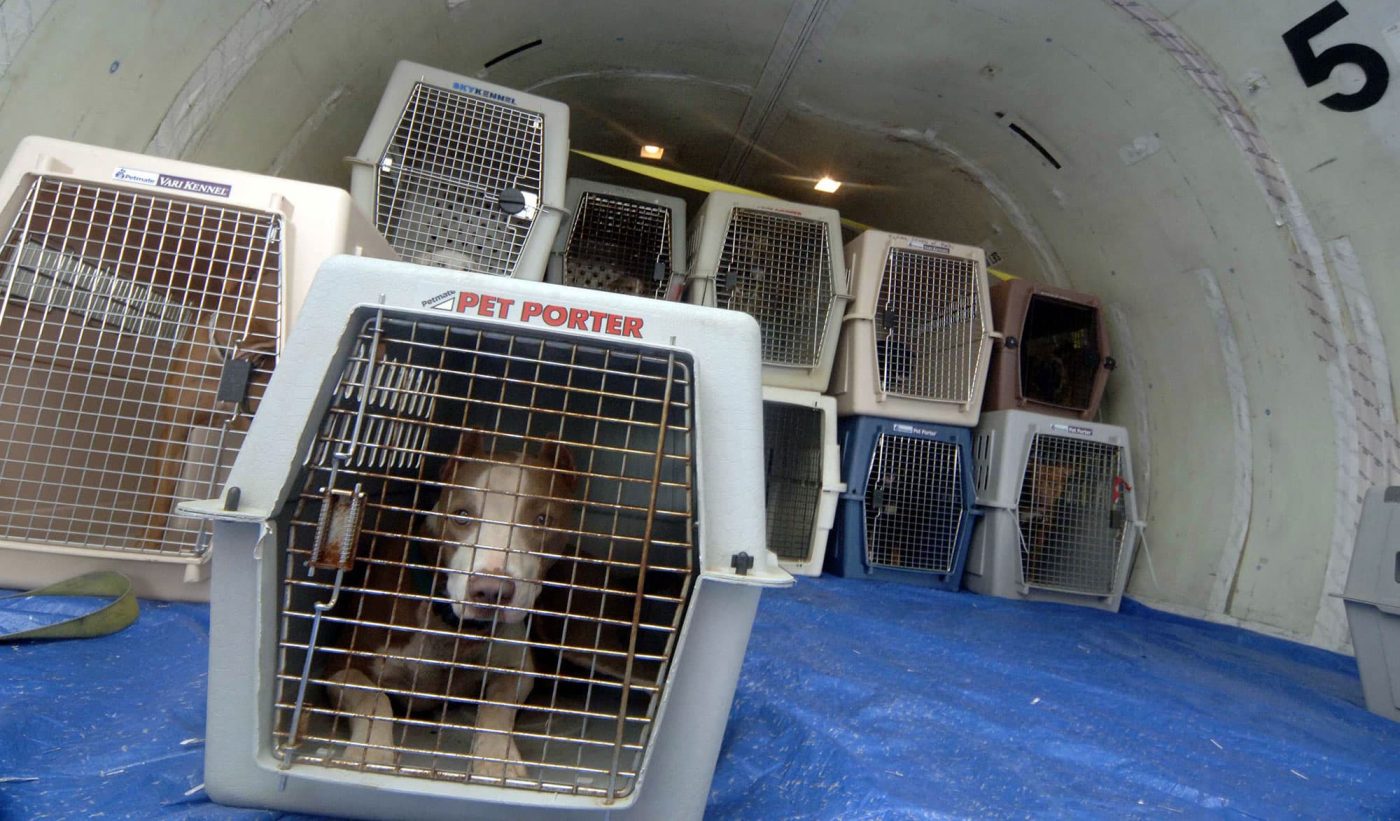
All crates must comply with IATA (International Air Transport Association) standards. Specifically, the animal must be able to stand, turn around, and lie down inside the crate without restriction. For brachycephalic breeds, dogs and cats with flat faces, such as pugs, bulldogs, or Persians, Qantas requires a carrier larger than the standard recommended size, due to the increased respiratory risks associated with altitude and stress.
The maximum permitted external dimensions are approximately 115 x 60 x 80 cm, though these figures may vary depending on the type of aircraft assigned to the flight; larger crates are accepted only on wide-body aircraft. The combined weight of the crate and the animal must not exceed 50 kg without prior contact with Qantas Freight. Two animals may share the same cage provided they are of the same species, comparable in size and weight, and accustomed to living together.
A few practical guidelines frequently come up in travelers’ questions:
- Never sedate your pet before the flight: staff must be able to assess its health upon arrival at the cargo terminal, and a sedated animal may be refused for transport.
- Place an absorbent mat or liner at the bottom of the cage; straw, litter, or newspaper are not permitted.
- Get the animal accustomed to its cage several days, or even several weeks, before departure.
- A water bowl equipped with an external funnel is required so that the animal can be given water without opening the cage. However, food is not allowed inside the cage during the flight.
- The animal’s name, as well as the sender’s and recipient’s contact information, must be clearly marked on the cage.
- A small, soft toy may be included, provided there is enough space for the animal to sit, stand, and move around freely.
Please note: Qantas Freight does not offer insurance for transporting animals, so it is the owner’s responsibility to purchase separate pet travel insurance if they wish to be covered; and it is strongly recommended to leave a sleepy animal at home rather than a sedated one, as the airline will refuse any animal that is clearly drowsy during the health check at the terminal.
Unaccepted breeds and animals
Certain breeds considered potentially dangerous are not permitted to travel on Qantas flights, including the American Pit Bull Terrier, Dogo Argentino, Fila Brasileiro, Perro de Presa Canario, and Presa Canario. Brachycephalic breeds are not prohibited but must be transported by an approved animal transport specialist, who will handle the booking and ensure that all safety conditions are met.
An animal deemed aggressive, or showing signs of destructive behavior during pre-flight assessments, will also be refused. Puppies and kittens must be at least 12 weeks old to travel, and animals over 12 years old must have a veterinary certificate confirming their fitness to fly. A pregnant female dog or cat must be accompanied by a veterinary certificate confirming that she will not give birth during the flight, and no animal may travel within 48 hours of giving birth.
What about the weather on the day of the flight?
This is one of the most misunderstood points for travelers. Qantas Freight refuses to allow animals on board when the forecast temperature at departure, arrival, or during a stopover falls outside a safe range, generally below 5°C or above 35°C for domestic flights, with specific thresholds adjusted for certain international routes, such as those between Australia and the United States. Since the tarmac isn’t always covered, the airline recommends avoiding midday flights in summer and very early or late morning flights in winter, when temperature variations are most pronounced. If an animal is refused due to weather, a new flight can be booked at no extra cost.
Quarantine and arrival formalities in Australia
Australia has one of the strictest biosecurity policies in the world. Animals arriving from abroad must generally land directly in Melbourne (except those from New Zealand or Norfolk Island), undergo post-entry quarantine, and have an import permit issued in advance by the Australian authorities. It is precisely the complexity of this process that justifies the almost mandatory use of a professional pet transport company for any international journey.
FAQ
Q: Does Qantas policy allow animals in the cabin?
A: No. Only assistance dogs (guide, hearing, or service dogs) can travel in the cabin with their owner. All other animals are transported via Qantas Freight.
Q: Can my pet travel in the hold as regular baggage?