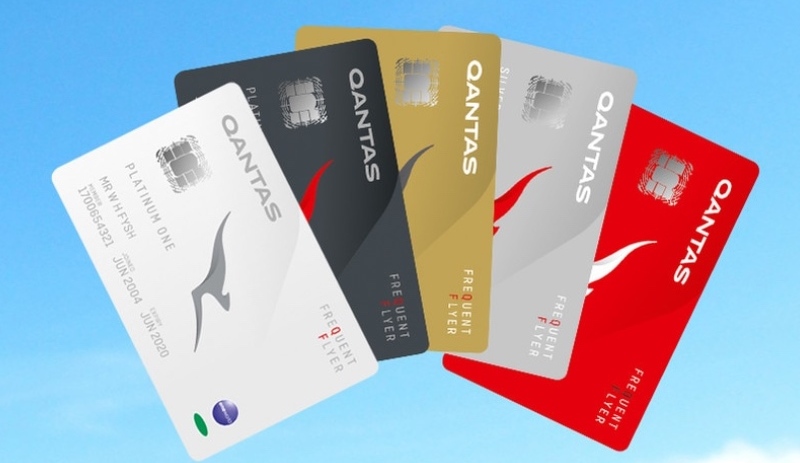
Qantas Frequent Flyer – Everything you need to know to maximize your benefits in the Loyalty Program
With over 18 million members, Qantas Frequent Flyer is one of the world’s largest airline loyalty programs and, without a doubt, the most influential for anyone who travels regularly in or to Australia.
This rewards program is based on two distinct currencies that must not be confused:
– What are Qantas Points:
Qantas Points are units of value that you earn and redeem for flights, upgrades, hotel reservations, shopping, or services.
– What are Status Credits:
Status Credits on the other hand, cannot be purchased or spent; they measure your activity within the program and determine your status level.;
The program’s five levels (status):
Bronze:
Entry level, awarded upon enrollment. It allows you to earn points only on Qantas, Jetstar, and Oneworld partner flights.
Silver – Equivalent to Oneworld Ruby:
– Access to priority check-in
– Priority boarding on Qantas and Oneworld partner flights
– A limited number of reserved seats available 24 hours before departure
– Requires 300 Status Credits and a minimum of 4 booked flight segments with Qantas or Jetstar to maintain this level.
Gold – Equivalent to Oneworld Sapphire:
This is the most popular tier among travelers, especially frequent business travelers. Its benefits include:
– Access to Qantas and Oneworld lounges on eligible flights
– Additional baggage allowance
– Priority boarding and check-in
– Free preferred seat selection.
– Requires approximately 700 Status Credits per year to maintain.
Platinum – Equivalent to Oneworld Emerald:
– Access to First and Business Class lounges
– Bonus points on flights
– Priority upgrades
This is the most highly valued status in the Oneworld ecosystem, as it grants access to First Class lounges across all alliance airlines.
Platinum One – The program’s ultimate status
This status is awarded to Qantas’s most loyal travelers, granting them access to even more exclusive perks:
– Dedicated phone line
– Invitations to exclusive events organized by Qantas
– Personalized services
– Free access to the world’s most premium lounges.
Earning status credits without flying:
Now, every Qantas Frequent Flyer member can earn up to 140 additional Status Credits per year through ten ground-based categories:
– Booking flight with Qantas,
– Spending on partner credit cards,
– Purchases at partner retailers in Australia: BP, Woolworths, etc,
– Exclusive deals with energy providers.
Please note:
* Land-based Status Credits count only toward achieving Lifetime Status.
* Silver, Gold, and Platinum members may carry over up to 50% of their excess Status Credits to the following calendar year.
* The limits are: 100 Status Credits for Silver, 350 for Gold, and 500 for Platinum.
Mile (Point) expiration:
Qantas Points do not have a fixed expiration date, but your account must record at least one eligible transaction (earning 1 point from spending) every 18 months to remain active.
Members receive alerts in their inboxes after 12 months of inactivity, but many members miss them; please ensure notifications are enabled in your account so you don’t lose your balance.
Point transfers between family members:
The Qantas program allows point transfers between members of the same family. Transfers start at 1,500 points per transaction, with no upper limit and no transfer fees. This option is particularly useful for helping a family member reach the point threshold required for a reward flight. However, family transfers do not count as activity toward account expiration. → Learn how to use your points for Classic reward flights (Use Qantas Points page).
How do I join the Qantas Frequent Flyer program?
Membership in the Qantas Frequent Flyer program is free for residents outside Australia and New Zealand. For Australian and New Zealand residents, a registration fee of 99.50 AUD applies, although free welcome offers are regularly available through certain partner credit cards or online on a dedicated page.
Signing up takes just a few minutes on qantas.com; simply fill out a short form; and you can start enjoying the benefits as soon as you receive your email confirmation.
The following three pieces of information are required to access your Qantas Frequent Flyer account:
– Membership number
– Last name
– PIN.
Frequently Asked Questions about Qantas Frequent Flyer:
Q:Is there a fee to join Qantas Frequent Flyer? A: It depends on where you live. Australian residents generally pay a sign-up fee of 99.50 AUD. For New Zealand, a similar fee (approximately 60 NZD) usually applies, although certain promotional periods have temporarily waived this charge. For all other countries, membership is free. There are also forms or banking partners that allow you to avoid the fee even if you’re a resident of one of the countries where a fee applies.
Q: What’s the difference between Qantas Points and Status Credits? A: Both are earned simultaneously on a paid flight, but they serve different purposes. Qantas Points are your “currency” to spend (on award flights, hotels, and products). Status Credits, on the other hand, cannot be redeemed for anything directly: they solely determine your progress toward a higher status tier in the program.
Q: How many status tiers are there, and how do you reach them? A: The program has five tiers: Bronze, Silver, Gold, Platinum, and Platinum One. Each tier requires you to accumulate an increasing number of Status Credits over a rolling period (usually 12 months), and the higher your status, the greater the benefits (lounge access, priority boarding, baggage allowance, priority for upgrades).
Q: Can you earn Status Credits without flying? A: Yes, to a certain extent. Certain purchases made with Qantas co-branded credit cards, purchases from specific partners, or participation in programs like “Qantas Business Rewards” can earn Status Credits, although flying remains the primary and fastest way to advance in the program.
Q: Do Qantas Points expire? A: Yes, but only if the account remains completely inactive for 18 consecutive months. Any eligible activity (such as a flight, a purchase through a partner, using the Woolworths card or the Qantas Wellbeing app, etc.) resets this 18-month period. In practice, it’s therefore quite rare to lose your points as long as you remain minimally active within the Qantas ecosystem.
Q: Can I transfer my points to a family member? A: Yes, under certain conditions: you must have been a member for at least three months, the recipient must be an “eligible family member” as recognized by Qantas, and a minimum of 1,500 points is required per transfer. These transfers are final and cannot be canceled.
Q: What is a “Classic Reward” flight? A: It’s the equivalent of an award ticket: a flight paid for entirely with points at a fixed fare (excluding taxes and fees, which are paid in cash). This generally offers the best value for your points, but availability is limited to a small number of seats per flight.
Q: With which airlines can you use your Qantas points? A: In addition to Qantas and Jetstar, the program covers members of the oneworld® alliance (American Airlines, British Airways, Cathay Pacific, Qatar Airways, Japan Airlines, etc.) as well as non-alliance partners such as Emirates, Air France, KLM, and Hawaiian Airlines. The list changes regularly, so it’s best to check availability at the time of booking.
Q: How does a points-based upgrade work?
A: The “Classic Upgrade Reward” allows you to upgrade a ticket you’ve already purchased by paying the difference in points. Requests are placed in a queue where priority is given first based on membership status (Platinum One before Platinum, before Gold, etc.), and then based on other secondary criteria. On high-demand international flights, Gold and Silver members often face long wait times or even repeated failures to secure an upgrade, particularly since the post-pandemic recovery.
FAQ on Qantas Frequent Flyer Program Status
Q: How do I log in to my Qantas Frequent Flyer account? A: Simply enter three pieces of information; your membership number, your last name, and your personal PIN; directly on the login page of the Qantas website or app.
FAQs about the Qantas Platinum Card
Q: If I set up automatic payments (bills, subscriptions, etc.) on my Qantas Platinum card, do these transactions count as eligible purchases for earning points, just like a manual payment? A: In most cases, yes: a direct debit processed as a normal transaction on your Qantas Platinum card (Qantas Money) earns points just like any other card purchase, since Qantas does not distinguish between payment methods (manual or automatic) but only considers the nature of the transaction itself.
That said, several user reports on forums specializing in rewards cards (notably Point Hacks) highlight important nuances to be aware of:
Excluded categories remain excluded, even with direct debit. Qantas explicitly states that certain types of transactions never earn points, regardless of the payment method: payments to government agencies, cash advances, money orders/traveler’s checks, purchases of foreign currency in cash, or gaming tokens.
How the provider codes the direct debit can play a role. According to the community, some direct debits for utility bills, insurance, or “Australia Post Billpay”-type payments are sometimes classified by the provider into merchant categories that earn fewer points—or none at all—regardless of Qantas’s own rules.
BPAY may behave differently. Some users report that BPAY payments made from a credit card account aren’t always treated the same way as a standard purchase—it’s best to check on a case-by-case basis depending on the biller in question.
Community tip: For bills that don’t earn points through standard direct debit, some people use an intermediary like PayPal (when the provider accepts it), which can sometimes help you earn the normal points rate.
FAQs about the Qantas Gold Card
Q: As a Gold member, I’ve submitted several upgrade requests for my Qantas international flights without ever being successful, and this has been going on for several months. Have upgrades become virtually impossible for Gold members? A: In fact, several members; including Platinum members; have reported a success rate of nearly zero for international upgrade requests over the past few months, compared to a much higher success rate before the pandemic.
The main reason lies in the very nature of Qantas’s queueing system: requests are processed first by status priority, then in chronological order of submission for members of the same status. In practice, a Platinum One member always takes precedence over a Platinum member, who always takes precedence over a Gold member, who always takes precedence over a Silver member; regardless of when each submitted their request. On highly sought-after long-haul routes (Europe, Asia), premium cabins are often already filled by Platinum members before your Gold request is even reviewed.
Here are a few strategies that can improve your chances, based on feedback shared online:
Book flights with plenty of empty premium seats; aircraft like the A380, which offer more Business/First Class seats, or flights during off-peak seasons.
Check Business Class availability using a tool like ExpertFlyer before booking, to target flights where seats are actually available.
Consider booking a Classic Reward in Business Class directly rather than an upgrade, if you have enough points; some forum users note that the point difference between a standard flight and a guaranteed Classic Reward seat is sometimes minimal, whereas an upgrade remains uncertain.
Consider the Bid Now Upgrade (bidding with points and/or cash), although this is always processed after Classic Upgrade Rewards, so it should be a last resort.
Q: Is it possible to use my own Qantas Points to book a hotel room that will be occupied by a family member rather than by me? And how do I actually go about doing that? A: Yes, that’s entirely possible, and the process is actually simpler than booking a flight.
Here’s how it works:
Log in to your own Qantas Frequent Flyer account, then make the reservation directly on qantas.com/hotels using your points balance (as a Classic Hotel Reward, paid entirely with points, or via Points Plus Pay if you prefer to combine points and a credit card, with a minimum of 2,000 points required). When entering your stay details, simply enter the name of the family member who will actually be staying in the room as the primary guest.
Several members confirm that, in practice, the Qantas hotel booking system only asks for the name of the person who will be staying at the hotel; this is in contrast to the flight booking process, where Qantas explicitly requires you to specify the family relationship (spouse, child, parent, etc.) to the passenger.