
Qantas Frequent Flyer is the loyalty program of the Australian airline Qantas. Launched in 1987, it is now one of the largest programs in Oceania, with several million members. It is based on two distinct currencies: Qantas Points, which can be spent to book award flights, upgrades, or other rewards, and Status Credits, which determine your level of program membership and therefore access to the benefits reserved for the most frequent flyers.
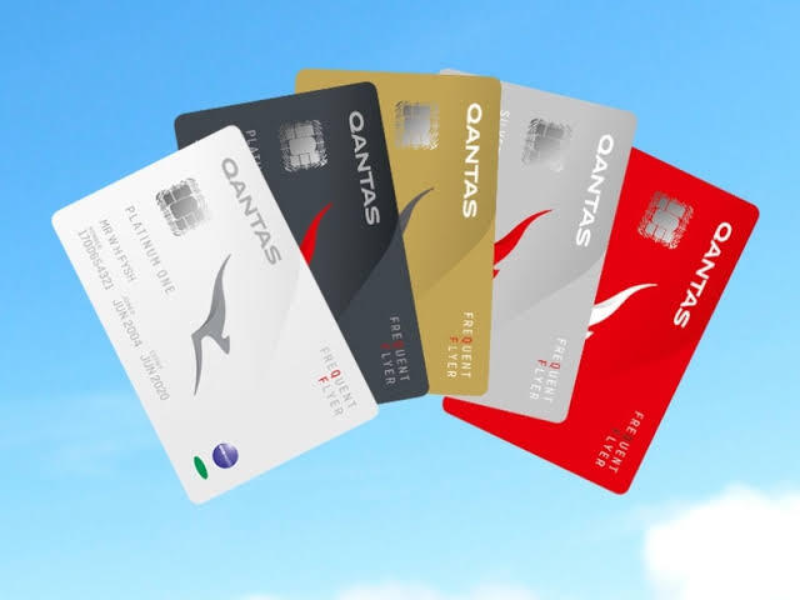
The program is organized into a status scale ranging from basic membership to the highest levels, reserved for frequent flyers and, for the very last, by invitation only. As Qantas is a member of the oneworld alliance, each status also gives access to an equivalent level within this alliance, which opens up privileges with partner airlines such as American Airlines, Cathay Pacific, Japan Airlines, Qatar Airways or Finnair.
The different Qantas Frequent Flyer statuses:
Bronze
This is the entry level, automatically awarded to anyone who joins the program. It doesn’t offer any major benefits in itself, but it’s the starting point for accumulating Status Credits and progressing to higher levels.
Silver
The first true “status” tier, Silver is obtained after accumulating 300 Status Credits within a single membership year, with a minimum of 4 eligible flight segments (bearing a Qantas or Jetstar Group flight number). To maintain this status the following year, you currently need to accumulate 250 Status Credits, again with the minimum of 4 segments. This level corresponds to Ruby status within the oneworld alliance. Read More
Gold
The upper-intermediate level, Gold requires 700 Status Credits to reach, with the same minimum of 4 eligible flight segments. The maintenance threshold is also set at 700 Status Credits (per year). This corresponds to oneworld’s Sapphire status. Read More.
Platinum
Designed for frequent flyers, Platinum requires 1,400 Status Credits to obtain, accumulated over one year of membership with at least four eligible segments. The maintenance threshold is currently 1,400 Status Credits. This grants equivalence with oneworld’s Emerald status, the alliance’s highest level. Read More.
Platinum One
This is the highest status accessible without an invitation, reserved for travelers who accumulate 3,600 Status Credits each year, including a minimum of 2,700 Status Credits earned on flights with a Qantas (QF) number. This threshold is the same for both granting and maintaining status. Platinum One offers maximum priority on all services (waitlists, upgrades, access to award flights) and some exclusive benefits, such as the ability to gift Platinum status to a loved one. Read More
Lifetime Status
In addition to the “classic” statuses, Qantas maintains a cumulative counter of all Status Credits earned since account opening. Once certain thresholds are reached, the corresponding status is acquired for life, regardless of the number of flights taken subsequently:
Lifetime Silver: 7,000 accumulated Status Credits
Lifetime Gold: 14,000 accumulated Status Credits
Lifetime Platinum: 75,000 accumulated Status Credits
Chairman’s Lounge
Beyond Platinum One, there is an even more exclusive circle, accessible only by invitation from Qantas. This is not a status that can be achieved by accumulating Status Credits, but a recognition reserved for a very limited number of individuals.
About Qantas Status Credits
Status Credits are the currency that powers the entire status system for Qantas Frequent Flyers. Unlike Qantas Points, which are used to obtain rewards and can be earned in various ways (everyday spending, loyalty cards, partner airlines), Status Credits are not redeemable: they are used solely to advance a member through the status ladder and then maintain their status from one year to the next.
Historically, Status Credits were earned almost exclusively by flying with Qantas, Jetstar, or partner airlines: the number of credits earned depends on the distance flown, the airline, and the booking class. They are calculated over a Membership Year specific to each account, at the end of which the counter resets.
Key new features introduced:
Carryover of excess Status Credits: Members can carry over some of their unused credits to the following membership year, up to a limit that varies depending on their current status.
Acquiring Status Credits without flying: A limited number of credits can be earned each year through everyday spending (bank card linked to the program, retail partners, service providers), spread across approximately ten categories.
The elimination of certain programs such as Club Points and Green Tier.
Earning Status Credits without flying:
In practice, Qantas’s system is based on Qantas Points, not directly on spending dollars. To unlock Status Credits “on the ground,” you need to accumulate 1,000 Qantas Points in a given category, which automatically triggers the allocation of a fixed number of Status Credits for that category. Each category can only be validated once per membership year, and the total is capped at 140 Status Credits per year, distributed across ten categories.
Not all categories earn the same number of Status Credits: the most “regular” and easiest-to-automate spending (bank card, banking, insurance, energy) earns twice as many as the more occasional categories (hotels, fuel, food, shopping, leisure).
Not all categories yield the same number of Status Credits: the most “regular” and easiest to automate spending (bank card, bank, insurance, energy) yields double the more occasional categories (hotels, fuel, food, shopping, leisure).
| Category | Status Credits for 1,000 Qantas Points | Examples of observed partners |
| Cards & Banking | 20 SC | Qantas Points bank cards (Qantas Money/Qantas Premier, American Express Qantas, ANZ Frequent Flyer, Westpac Altitude Qantas, NAB, St.George/BankSA/Bank of Melbourne Amplify Qantas), Qantas Pay, Qantas Money home loans |
| Utilities & Services | 20 SC | Electricity and gas suppliers (Red Energy), solar installers (Solargain), some telecom operators |
| Hotels & Travel | 10 SC | Qantas Hotels, Qantas Holidays, Qantas Cruises, Airbnb, major hotel chains (Hilton, Marriott, Hyatt) |
| Fuel & Automotive | 10 SC | BP stations, car rental companies (Avis, Budget), Uber, Qantas Valet (airport parking) |
| Shopping | 10 SC | Qantas Marketplace, department stores and partner brands (David Jones, Kogan, Adairs, Hype, etc.) |
| Health, leisure & entertainment | 10 SC | Streaming services (Binge, Kayo), cinemas (HOYTS), certain health and wellness partners |
FAQ
Q: How long does Qantas Frequent Flyer status last once earned?
A: Status is valid for the entire current membership year, and then for the following year if the member manages to accumulate the required number of Status Credits again before their account anniversary date.
Q: Do Status Credits expire like Qantas Points?
A: Yes, but differently. Status Credits are reset at the start of each new membership year, regardless of any account activity, while Qantas Points only expire after a prolonged period of inactivity (earnings or spending) on the account.
Q: Can I lose my Qantas Frequent Flyer status?