
Track flights operated by the Australian airline: Check departure and arrival times, delays…
Delayed takeoff, gate changes, arrival times pushed back, tracking a Qantas flight’s status in real time has become just as essential as your ticket. Whether you’re a passenger, picking someone up at the airport, or simply curious about the plane’s whereabouts, here are all the available resources and how to use them effectively.
Flight tracking on Qantas.com
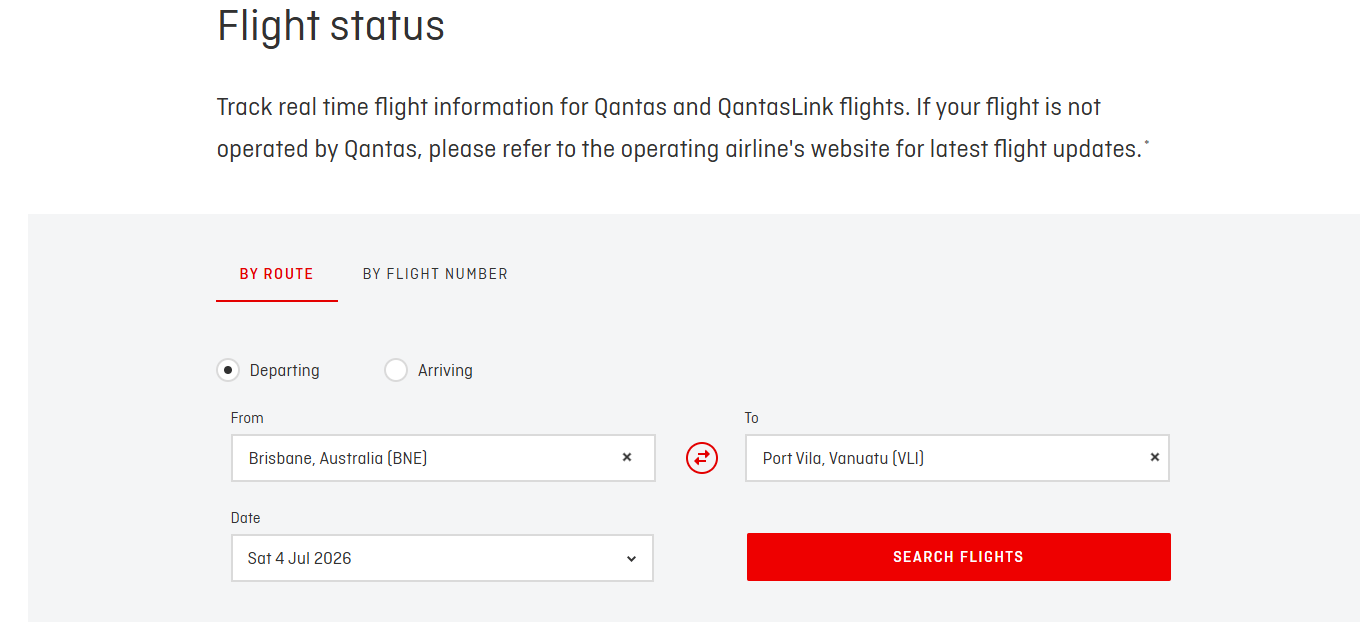
The most reliable way to track a Qantas flight is to visit the flight status page on Qantas.com. Simply enter the flight number (for example, QF1 for the Sydney–Dallas route) and the departure date. The page displays real-time information on the scheduled departure time, estimated arrival time, boarding gate, terminal, and the flight’s overall status (on time, delayed, in flight, landed). The information is updated every few minutes and comes directly from Qantas’s operational systems.
– Track your Qantas flight using the Qantas app
For passengers with a Qantas ticket, the mobile app is the best way to track your flight. Once your reservation is saved in the app, you’ll automatically receive push notifications in the event of a gate change, delay, or cancellation—without having to actively check the website. The boarding pass in the app is also updated if there are changes to the gate or terminal.
Key points: Flights operated by Qantas have flight numbers starting with QF (e.g., QF7 and QF94). Some flights marketed by Qantas are operated by partner airlines under a codeshare number—for example, a flight issued as QF but operated by Japan Airlines or Cathay Pacific. To track these flights, it’s often best to use the operating airline’s flight number rather than the Qantas codeshare number.
The “Track My Bags” feature is available to allow Qantas passengers to check the status of their baggage and track its progress. It indicates whether their baggage has been checked in, is in transit, or has arrived at its destination.
This is useful for tight connections to verify that the baggage has followed the same itinerary as the passengers.
– Track a Qantas flight using another tool:
Outside the Qantas ecosystem, several specialized apps allow you to track any flight in real time with more detailed data: the aircraft’s GPS location on a map, flight altitude, and weather information. The most popular among frequent travelers are FlightAware, FlightRadar24, and Flightera.
These tools are particularly useful for people picking up loved ones at the airport, as they allow you to estimate the arrival time at the baggage claim area much more accurately than the airport’s departure/arrival boards.
– Check the departure boards at the airport:
In Qantas terminals (T1 and T3 in Sydney, and T2 in Melbourne, etc.), the FIDS (Flight Information Display Systems) boards are updated in real time. However, for international arrivals, gate changes are often posted very late on the screens. The Qantas app remains more responsive, which is why it’s a good idea to enable push notifications if your flight includes a connection.
Flight delays and cancellations with Qantas:
If your flight is delayed or canceled by Qantas, you’ll receive a notification via email or text message using the contact information on file in your reservation. You can then manage the change directly from the “Manage My Reservation” section by accepting the new flight option or requesting a refund. → Learn more about managing your Qantas flight booking.
– What are your rights?
In Australia, legislation regarding air passenger rights is less prescriptive than European regulations (EU Regulation 261/2004), but Qantas publishes its own policy for assisting passengers in the event of disruptions. In the event of a significant delay or cancellation attributable to the airline (and not to extraordinary circumstances such as weather or an air traffic controllers’ strike), the airline commits to offering rebooking on the next available flight, a meal at the airport if the wait exceeds 2 or 3 hours—depending on the flight itinerary—and, in some cases, overnight accommodations for delays lasting through the night.