
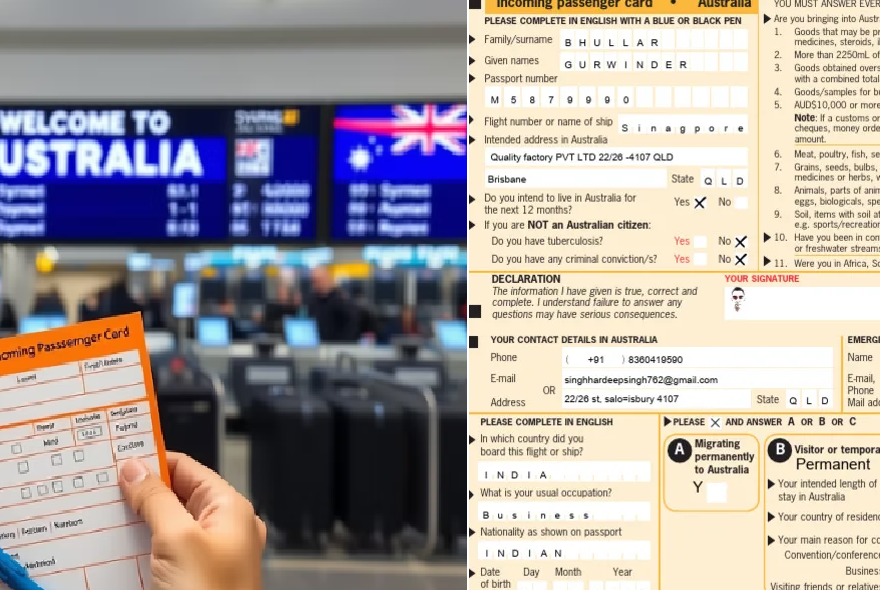
Qantas is at the forefront of a change that is redefining the experience of travellers arriving in Australia. In partnership with border authorities, the Australian airline is testing a fully digital system designed to replace the traditional orange paper card handed out on international flights.
The process being tested by Qantas is simple:
– Passengers complete their declaration up to 72 hours before their flight, directly in the Qantas app.
– Once the declaration is validated, a digital pass containing a QR code is sent to them by email.
Upon arrival, travelers simply need to present this QR code to ABF and DAFF officials, who scan it before allowing the traveler to proceed.
A phased rollout across the Qantas network:
The rollout didn’t happen overnight. After the first test flights departing from Auckland, Qantas gradually expanded the program to its other Australian destinations. Then, in August 2025, Sydney was added to the list of participating airports.
By the end of 2026: Qantas plans to expand the program to its flights to Perth and Adelaide.
Since the launch, more than 450,000 travelers have already completed their digital declaration via the Qantas app.
The paper form remains available:
It’s important to make this clear: the transition to digital doesn’t happen overnight. The paper “orange card” remains available and continues to be used by:
– travelers who are not eligible for the digital system being tested by Qantas;
– passengers traveling with airlines that have not yet joined the ATD program.
Declaration Requirements: What remains the same for passengers
Whether the declaration is made on the paper form or via the Qantas app, the legal requirements for travelers entering Australia remain the same. You must still declare:
– any food products you are carrying;
– plant materials (seeds, plants, wood, etc.);
– animal products;
– any amount of foreign currency equal to or greater than AUD 10,000 (or equivalent).
What about other airlines?
Building on the success of the pilot program conducted by Qantas, the Australian government has decided to roll out the system nationwide. An investment of 56.1 million Australian dollars over four years has been announced to deploy the ATD at all of the country’s international airports and seaports, extending beyond the Qantas network alone.
This expansion won’t happen overnight either. The government expects it will take 12 to 18 months to gradually extend coverage to all of Australia’s international airports and ports, with the goal of completing the process by the end of 2027.