
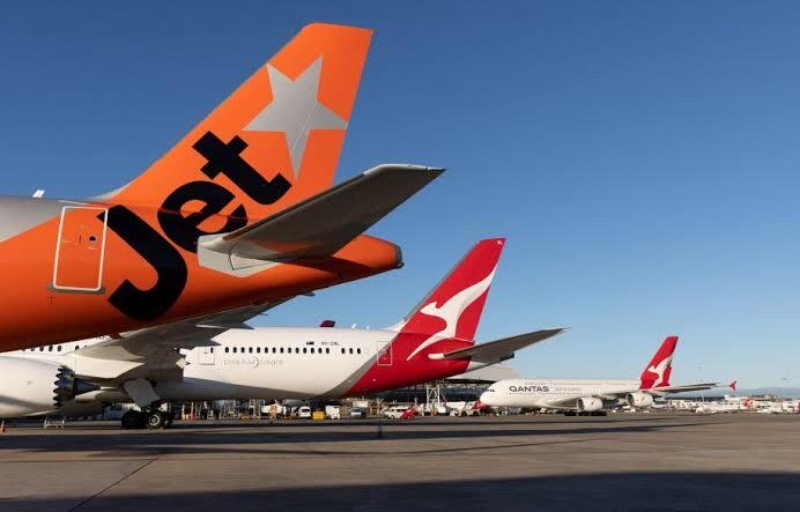
Australian airline group Qantas officially announced on Tuesday its withdrawal from Jetstar Japan’s equity. The company signed a binding agreement with Japan Airlines (JAL) to sell its 33.32% minority stake in the Japanese low-cost subsidiary through a share buyback valued at 8.2 billion yen, or approximately 52 million U.S. dollars.
This transaction, which must still clear several regulatory hurdles, follows a non-binding memorandum of understanding unveiled last February; it is expected to be finalized by June 2027, at which point Qantas will permanently cease to account for its share of Jetstar Japan’s results, profits, or losses.
A New, entirely japanese shareholder base:
The transaction reshapes the low-cost carrier’s ownership structure. The Development Bank of Japan (DBJ) is joining the shareholder base as a new investor, while Japan Airlines and Tokyo Century Corporation will retain their respective stakes. Once Qantas’s exit is finalized, Jetstar Japan will transition to a governance structure with exclusively Japanese ownership.
As a direct result of this restructuring, the airline will eventually phase out the “Jetstar” brand and adopt a new corporate identity, with the goal of establishing a stronger foothold and becoming more competitive in the Japanese low-cost airline market—a sector that is particularly competitive locally.
A history dating back more than a decade:
Jetstar Japan was founded more than a decade ago as a joint venture between Qantas, Japan Airlines, and Mitsubishi Corporation. Its first flights began in late 2012 from Narita Airport, near Tokyo, laying the foundation for a sustainable low-cost carrier in Japan.
Strategic refocus for Qantas:
From the Australian side, this divestment is part of a strategy to reallocate resources. Qantas intends to redirect the funds thus freed up toward its priority activities: strengthening its fleet, developing its premium offerings, and expanding its international network, for both the Qantas and Jetstar brands.
From an accounting perspective, the airline expects a gain estimated at approximately 115 million Australian dollars, recorded outside of current operating income and recognized primarily in fiscal year 2027. Part of this gain would stem in particular from the revaluation of foreign exchange reserves accumulated over the years in connection with this overseas investment—a standard accounting practice when disposing of an equity interest denominated in a foreign currency.
No impact on current flights:
Qantas was keen to reassure the public that there would be no immediate operational consequences. Flights between Australia and Japan, whether operated by Qantas or Jetstar, will continue to operate as usual. Existing codeshare agreements with Japan Airlines will also remain unchanged, ensuring continuity of service for passengers.