
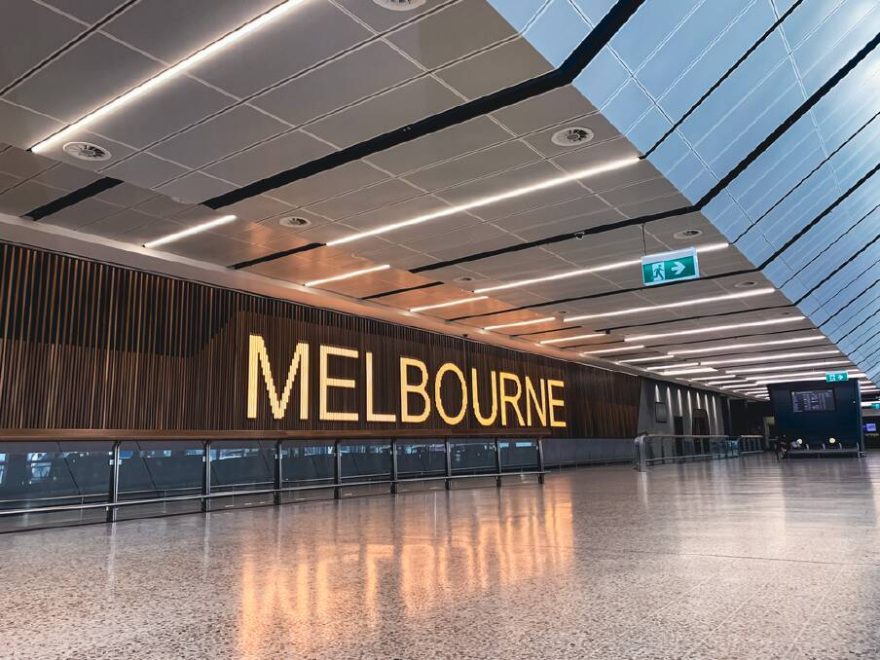
Melbourne Airport hit again by a wave of disruptions.
Since early July, the Australian airline industry has been experiencing an unusual period of turbulence, and Melbourne Tullamarine Airport has been one of the main epicenters of these disruptions. Over the course of ten days, the airport repeatedly recorded more than 200 daily delays, as well as a series of cancellations that disrupted connections to Sydney, Brisbane, Adelaide, and the Gold Coast.
A rough week for Tullamarine:
The numbers kept piling up day after day. On July 1, the airport already had 233 delays and 12 cancellations, making it the hardest-hit location in the Australia-New Zealand network that day. The situation repeated itself on July 4 with 281 delays and 6 cancellations, then on July 6 with 95 delays and 4 cancellations. On July 7, the trend began to rise again, with 190 delays, then 237 according to records, accompanied by several additional cancellations.
Over the entire period, Melbourne found itself neck-and-neck with Sydney for the title of the country’s most disrupted hub, with the two airports regularly vying for the top spot depending on the day.
Disruptions persist at Avalon :
On July 9, the disruptions took a different turn: Avalon, the secondary airport that also serves the Melbourne region, was hit hard. Sixteen flights were canceled and three others were delayed, a particularly high number given the limited number of daily flights at this airport. Flights to Sydney, Brisbane, Adelaide, and the Gold Coast were the hardest hit, leaving many passengers stranded or forced to reroute to the main Tullamarine Airport, or even to use other modes of transportation for trips to Adelaide.
No single cause has yet been publicly identified to explain this spike in disruptions at Avalon. Industry observers point to a combination of factors that have already been recurring this season: winter weather conditions in southeastern Australia, strains on crew and aircraft availability, and persistent pressure on transportation infrastructure.
Winter weather remains a recurring aggravating factor: earlier this year, Tropical Cyclone Koji had already caused massive cancellations in northern Queensland, illustrating how a single weather event can ripple through the entire network when aircraft and crews are out of position.
The most affected airlines:
Over the entire period, Qantas, Jetstar, Virgin Australia, and their regional subsidiaries—such as QantasLink—were among the carriers most frequently cited in connection with delays in Melbourne, with ripple effects on regional airlines that rely on Tullamarine for their connecting flights.
What options are available for stranded travelers?
Airport authorities and airlines recommend that passengers check their flight status directly through the airlines’ official apps before heading to the airport, allow for longer layover times in the coming days, and contact their carrier promptly in the event of a cancellation to arrange for rebooking. No return to a fully normalized situation has been formally announced at this time.